






نيروز الإخبارية :
A new study titled "Global Health Reform through a Regional Lens: The Middle East and Central Asia Perspective” calls for a shift in how global health systems are designed, financed, and governed, highlighting the need for approaches that are better aligned with national priorities and strengthened through regional collaboration.
The study, led by regional and global experts in collaboration with EMPHNET, presents findings from consultations with stakeholders across 17 countries in the Middle East and Central Asia.
Drawing on interviews, surveys, and a regional policy dialogue, the study provides an evidence-based analysis of the strengths and gaps in the current global health architecture, along with identified priorities for reform.
"The findings reflect a strong regional consensus on the need to rebalance global health systems toward country ownership, regional leadership, and integrated approaches,” the authors note.
Key Reforms
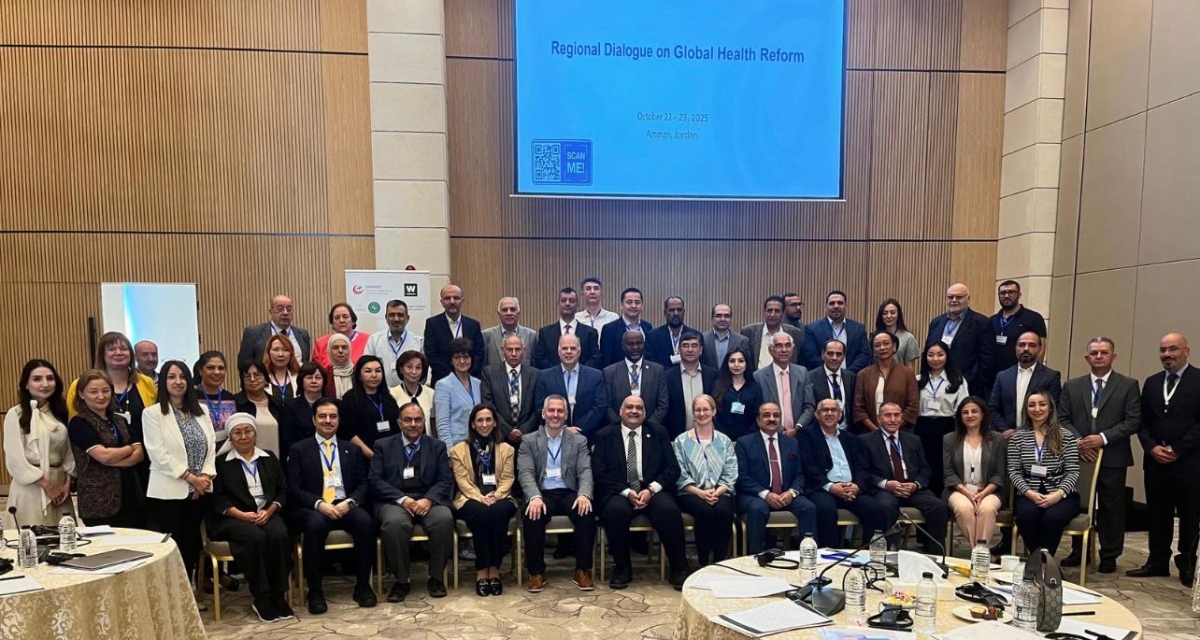
Following in-depth discussions and deliberations during the regional convening in Amman, Jordan, a set of priority reforms was identified to guide future action:
Reform 1: Align global support with national priorities while promoting equity, accountability, and meaningful community participation.
Reform 2: Shift governance closer to the regional level and strengthen regional leadership and decision-making capacity.
Reform 3: Establish and reinforce regional platforms for collaboration, coordination, and knowledge exchange.
Reform 4: Strengthen regional evidence generation, data systems, and digital integration. Digital transformation is essential for accelerating reform, enhancing accountability, and enabling informed decision-making.
Reform 5: Strengthen national leadership to advance integrated, primary health care (PHC)–centered health systems.
These findings point to the need for a shift away from fragmented, externally driven models toward more coherent, regionally anchored, and country-led approaches.
Advancing a Regional Approach to Global Health Reform
The study outlines a shared regional vision for reform that emphasizes stronger alignment of global support with national priorities, enhanced regional leadership, and more effective coordination mechanisms. It also highlights the need for more sustainable and predictable health financing, greater investment in digital and data systems, and the strengthening of integrated, primary health care (PHC)–centered health systems.
The findings build on the Middle East and Central Asia Regional Dialogue on Global Health Reform, led by EMPHNET in collaboration with the Middle East Council on Global Affairs and Nazarbayev University School of Medicine, with support from the Wellcome Trust. Through this initiative, policymakers, public health leaders, and researchers were convened to identify shared priorities and inform practical directions for reform.
The study underscores that achieving meaningful reform will require strong political commitment, improved coordination across global, regional, and national levels, and sustained investment in health systems.

وكالة نيروز الإخبارية
لا مانع من الاقتباس واعادة النشر شريطة ذكر المصدر { وكالة نيروز الإخبارية } الآراء والتعليقات المنشورة تعبر عن رأي أصحابها فقط. © 2019 - جميع الحقوق محفوظة.
, بريد الكتروني : khalil.aljbour11 [at] gmail.com للإتصال : 0790980000
تصميم و تطوير